Friday, July 23, 2010

LASERS AND THE LIFE COACH CHAPTER TWO

LIFE COACH CHAPTER 2


Get strong. You can sail often and longer to gain stamina and suppleness, but to gain strength you need to stress the muscles. Maybe best 8 to 12 times the most load you can manage. Then repeat that two or three times with a rest day in between. (8 to 12 reps with 2 to 3 sets).

More muscle makes bones stronger. More muscle burns more energy and helps to lower blood pressure, cholesterol, and blood sugar. More muscle and strength reduces the risk of falling and helps balance.

Muscle fatigue results in more secretion of human growth hormone and builds muscles and stimulate the brain to create more brain cells. More muscle more brain.

Sign up for the gym, go to the YMCA, exercise at home. This is a big job. You can spend full time at it. So you need to work out a plan that will fit your life, but work out something that will increase your strength.

.

Friday, July 16, 2010

THE LASER SAILOR AND THE LIFE COACH

  
    The Laser Sailor and the Life Coach.. Chapter One.


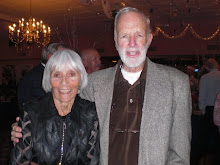
In the picture is our local Laser PRO on the left and your “Life Coach” on the right.

We old folks need to be introduced to the idea of “Coaching”. Most of us are familiar with the Football Coach and the Basketball Coach. We called them Coach Jones and Coach Smith. We are familiar with the teacher, instructor, trainer, mentor, leader, captain, professor, doctor, lawyer, accountant, insurance agent, financial advisor, minister, police and judge. They all give advise.

Now we have the sailing coach, parenting coach, physical coach, family coach but/and what is the the “life coach” thing?

Slowly we have been learning about exercise, diet and a lot of other little things that add up to a long and happy life – but they don’t seem to be getting much attention, so maybe we have a need for someone to put it all together for you. Soooo, if you are interested, Laser sailors, here is your LIFE COACH. It will come in multiple chapters. Perhaps better to call it “life instructions”, because we will not be looking over your shoulder and making comments or reviewing your last actions like a real coach should be doing.

What has all this to do with Laser sailing? A smarter, stronger, and happier person is a better Laser sailor, maybe? What do you think? And if you live longer, you might sail more?

Start with exercising. Maybe the most important and most widely disregarded. As long ago as 1971 the German Ernst Van Aaken MD reported marked decrease in cancer in veteran long distance runners. (Figure out that connection?) Easier to understand how running and exercise helps reduce weight, reduces type two diabetes, lowers cholesterol, lowers blood sugar, prevents heart attacks. Stimulates stronger bones and keeps joints moving. Running stimulates the release of “happy hormones” that make people happier and maybe smarter. (The runner’s high after 30 to 60 minutes running.) Exercise simulates formation of new brain cells, something that a few years ago we thought didn’t happen at all. (You had so many brain cells at a young age and only lost cells after that.)

So RUN if you can. Walk if you can’t. Ride a bike if you must, or swim or dance or mix up the bunch. Apparently the body was meant to move and it does better if it is doing it. Do as much as you can. Start out slow if you need to and gradually increase. How much? As much as you can fit into your life. Skip the elevator. Take the stairs. Park further away at Walmart. When waiting, get up and walk around. Turn off the TV.

Maybe do the pedometer thing and go for 10,000 steps (4 or 5 miles). The 10,000 steps come from some Japanese suggestion. Not a bad suggestion, but not set in stone.

Laser sailors will hike longer, work the waves better, sail happier.

When you get past the age of 25 or 30 years, things and strength will start going down hill, but if you keep moving, it will not go so fast.

Listen to your body– if you walk/run and feel tired and sore , rest a little. If you get sore knee, foot, etc – switch to the bike which pounds less, or swimming which unloads the weight while you still use all the muscles. Back to run/walk when the soreness is gone or continue the other activity if you enjoy it more..

Get with your exercise.

Coming later in other Chapters–eat or not eat, think, friends, community, reduced stress, laugh, share, forgive, tolerate, learn, behavior modification, and goal setting.                                                                                                                                                                   
.

Thursday, July 8, 2010

LASERS LOOK OUT FOR THE FLIP UP


We have had two Lasers with holes punched under the roll lip where the flip up on the Seitech Dolly rests. Maybe some one sat on the boat on the dolly with the flippers up? Maybe the cockpit filled with water and that punched it through..

I called Andy Levine at Tackle Shack near St. Pete. He handles the Laser things over there. Has he had any trouble? Oh, yes. When he sets up the dollies for the new boats for charter, he doesn’t put the flippers on. If some one buys them after, he hands them the flippers, so they can put them on if they want.

I have taken my flippers off and will do the same for the LESC youth foundation boats. The repair of the holes is not difficult, but you have to lay down on the ground, or turn the boat over to see the damage, or be looking for the leak into the hull.

Will hanging on the strap deform the hull. I will see. There are no hard spots, so I think it will be fine. The strap is just behind the centerboard trunk, so there is some support.

Does anyone else have some experience?
.

Wednesday, June 30, 2010

LASERS NEED WATER

Lasers need water.


On hot days Lasers need to drink water. It helps to hydrate before going out. The April 2010 Journal of Athletic Training reported that a 2% dehydration before running gave slower times and recommenced 16 ounces of fluid 1 to 2 hours before and another 4 to 8 ounces 15 to 30 minutes before running.


In 2008 the Medical Society in Sports and Exercise found that cyclists that drank cold beverages before and during work out were able to ride longer.


No reason it should not carry over to the active sailor.  So if it is hot, start hydration early and if you can, make it cold. .
.

Friday, June 25, 2010

LASERS GO DOUBLE

                                                                                                                                                                                  LASERS GO DOUBLE


If you want to take a friend sailing or to teach someone to sail, try to do it on your Laser.

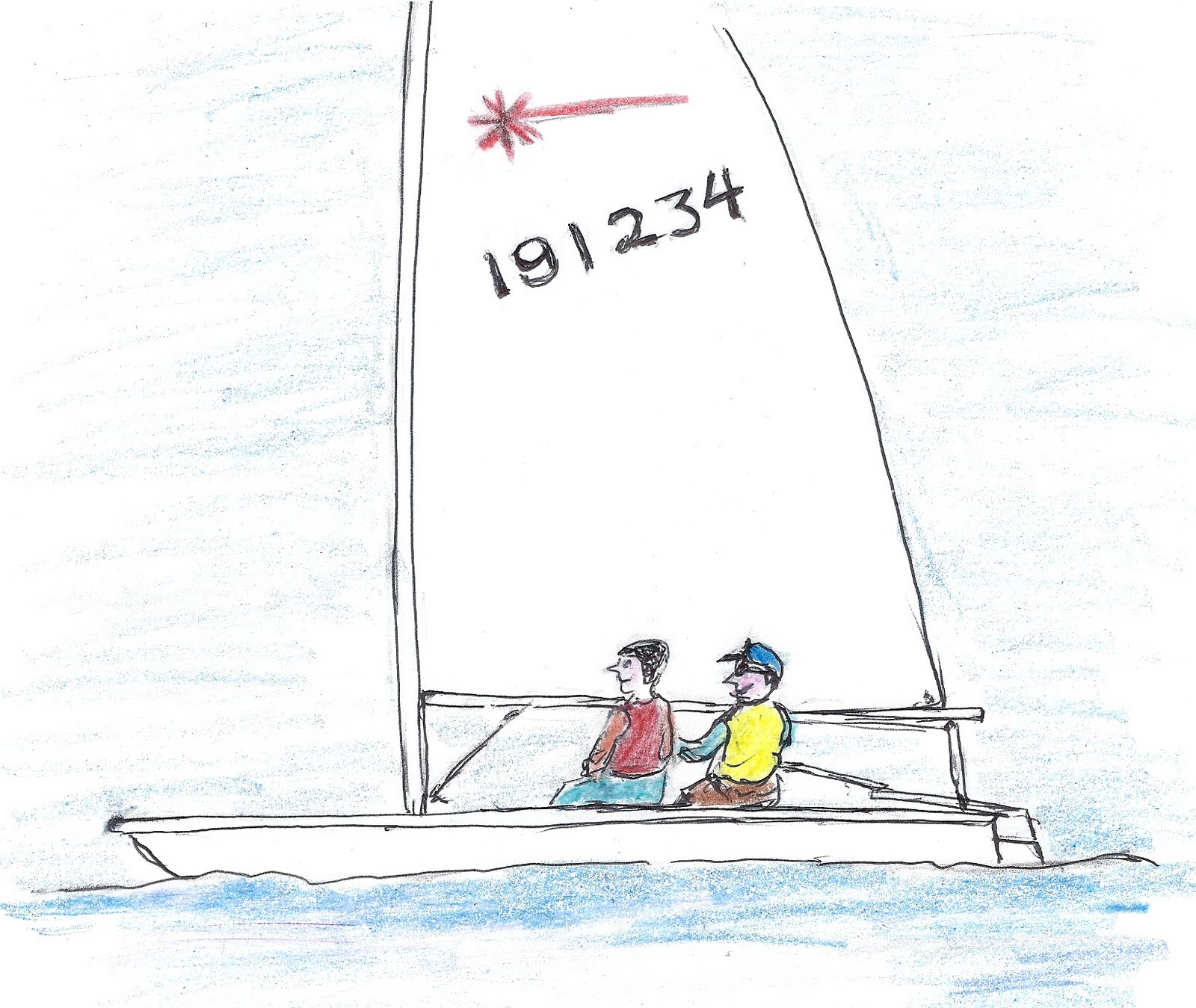
Fairly easy if the primary skipper sits in the back and takes the sheet from the middle boom block (skip the rachet block), then the second person can sit with legs in the front of the cockpit. Primary skipper can control the whole thing. If you want to share, then it is easer to let a beginner start with steering and the experienced controls the sheet. Do it the other way around if you want.

If you want to have one of you steer and sheet through the rachet block like they were sailing alone, then the other can sit forward on the centerboard.

If the wind is light, then one sits on one side and one on the other. If you want to change sides when you tack or gybe then moving about gets a little more complicated.

If you turn the thing over, you have a lot of help to get it back up.
.

Monday, June 21, 2010

LASERS HAVE FUN.

LASERS HAVE FUN. Comments on “ Be Your Own Sailing Coach”


A few weeks ago Tillerman had a note about life jackets and a picture of the RNLI crew with all his heavy weather gear and his inflatable life jacket. The note was from the book “Be Your Own Sailing Coach” by Jon Emmett, Copyright 2008. (The is a book written from England with the “kicker” and stuff like that.) Information from the Chapter on Starting was reprinted in the Laser Sailor, Summer 2009.

I have two earlier blog entries, a Long Coach and a Short Coach. I grew up sailing, when there wasn’t any coaches. Well, we had high school kids teaching grade school kids how to sail, and everybody else got in a boat and started learning more.

I got the “be your own coach book” to see if I was missing anything. Some Laser pictures and notes from Paul Goodison. Twenty chapters on things you need to know.

The first chapter is goal setting. Now that is pretty easy for Lasers and most of the rest of us. The goal is having FUN. That is not mentioned in the goal setting section. Nobody is sailing a Laser for a living, unless maybe they are a really good coach. The professional sailors, I bet, started out doing it for fun, and then turned it into money working on big boats.

Occasionaly I see our high school sailing team out sailing in circles and strange little short courses that don’t seem to be related to anything. When I ask, I am told they are just having FUN. We want to keep them happy.

Yes, when I started sailing, I just wanted to get the boat to do what I wanted it too. Have it under control. Sail to someplace and back. Make all the parts work. Take somebody out for a sail. When we first got Lasers and the wind was up, it was just reaching back and forth on that wild unstable ride. We weren’t racing just ripping back and forth.

So what can we do to have FUN when sailing? 1) Sail back and forth. 2) Sail backwards. 3) Turn over and then right the boat. 4) Sail fast. 5) Sail slow. 6) Sail to some place and back. 7) Race a little, like there is another sail boat and see if you can catch and pass them. 8) Join a Yacht Club, Sailing Club or Cruising Club for socializing. 9) Tired of just sailing across the harbor, then try sailing around the world.(I don’t think that will all be fun.)

Avoid too much wind and not enough wind Experience will widen that gap between too much and too little in which you can have FUN.

Maybe you want to sharpen your skills of boat handling. You might want to do some type of racing. That will work better in a one design class, where you can match your boat against one that is very similar. Do the Portsmouth or the PHRF thing, but you may get lost in all the rating questions.

One of the best things about racing is the schedule. You have a time to race and a place to go. You don’t go to the picnic because everyone knows you will be sailing. Then when you get out and sail with other boats you get a feel for what you might be able to do better. Because it is on a time and place situation, you will be sailing in lighter winds and in stronger winds than you would other otherwise. Your world expands.

Maybe you do just a little racing, expand your skills, and then go back to things that seem more fun to you.

Don’t forget. If you get into racing, that the primary goal is having FUN. Not fleet champ or that sort of thing. OK, win all the races, but don’t forget the goal.

THE LAST CHAPTER IN THE BOOK IS ABOUT MONEY.

So how much money are you going to spend to have fun.. How big is the boat. Where are you going to keep it. How often the haul out and how much does it cost. New Sails? New boat? Trips to regattas if you get into racing. Hire a coach.

So those are the best parts of the book.– Chapter 1 Goal Setting and Chapter 21 Money.

Now you judge of what you want. Spending money and time sailing, against the other things that you could be doing.

Will it “Save Sailing”?

It will, if sailing deserves it!

Friday, June 11, 2010

LASERS GO TO REGATTAS

Lasers go to regattas.

Tillerman report a lot of fun on a “no wind” day at a regatta. He had a chance to visit more with local and visiting sailors.

A. I., one of our lake sailors went to the coast to a regatta and was astonished by the wave actions and problems with them both upwind and down wind.

A hundred years ago when I lived in Springfield, Illinois and we sailed on a small lake. We went to Peoria and Alton, Illinois to sail in the current of the Illinois River, to Louisville, Kentucky to be in the current of the Ohio river and to Winnetka, Illinois to sail in the waves of Lake Michigan.

You learn a lot visiting other clubs. They handle the races a little different. You meet some other sailors with some different ideas. You make new friends. You meet folks that go to a lot of regattas and people that always stay at home.

If you go to their regatta, they are more likely to come to yours. The number of sailors on the same course gets larger, more exciting and more complicated..

You will be sailing in lighter winds and in stronger winds, as you match up with more experienced sailors.

Get your lights fixed on the trailer. The bottom cover for your boat. The check list for things to take and use it when you pack to come home.

When you get home you can apply you new knowledge. Better racing. More fun.

.